
.png?w=1254&h=1254)
.png?w=1254&h=1254)
.png?w=1254&h=1254)
.png?w=1254&h=1254)
.png?w=1254&h=1254)
.png?w=1254&h=1254)
-2.jpg?w=1500&h=1500)
-1.jpg?w=1500&h=1500)
🔥 A Dull Chain Doesn’t Always Need Replacing — Sometimes It Just Needs to Be Sharpened Properly
A chainsaw chain usually doesn’t become useless overnight.
It gets slower.
You start pushing harder.
Cuts take longer.
The saw produces finer dust instead of healthy wood chips.
Eventually, the chain feels so poor that many people simply remove it, throw it into a drawer, and install a new one.
But in many cases, those old chains still have usable cutter material left.
The real problem is that restoring a dull chain correctly can be surprisingly difficult.
Freehand filing looks simple, but if the angle, grinding position, or amount of material removed varies too much from tooth to tooth, sharpening may not restore the cutting performance you expected.
Worse, repeatedly sharpening incorrectly can remove unnecessary cutter material and shorten the usable life of the chain.
The Adjustable Angle Chainsaw Chain Sharpener Kit is designed to make chain restoration easier, more controlled, and more repeatable — so you can bring dull chains back into useful service instead of replacing them too early.

🪚 Restore Cutting Performance Instead of Fighting a Dull Chain
A properly sharpened chainsaw chain should cut into wood with minimal downward pressure.
When the cutters become dull, the saw has to work harder.
That can mean:
- Slower cutting
- More pressure from the operator
- Increased heat and friction
- Poorer cutting feel
- More time spent on every log or branch
Sharpening restores the cutting edge by removing a small amount of worn metal from each cutter.
But the goal isn’t simply to “grind until it feels sharp.”
The goal is to restore the cutter profile while removing only as much material as necessary.
That is where a guided sharpening tool becomes valuable.
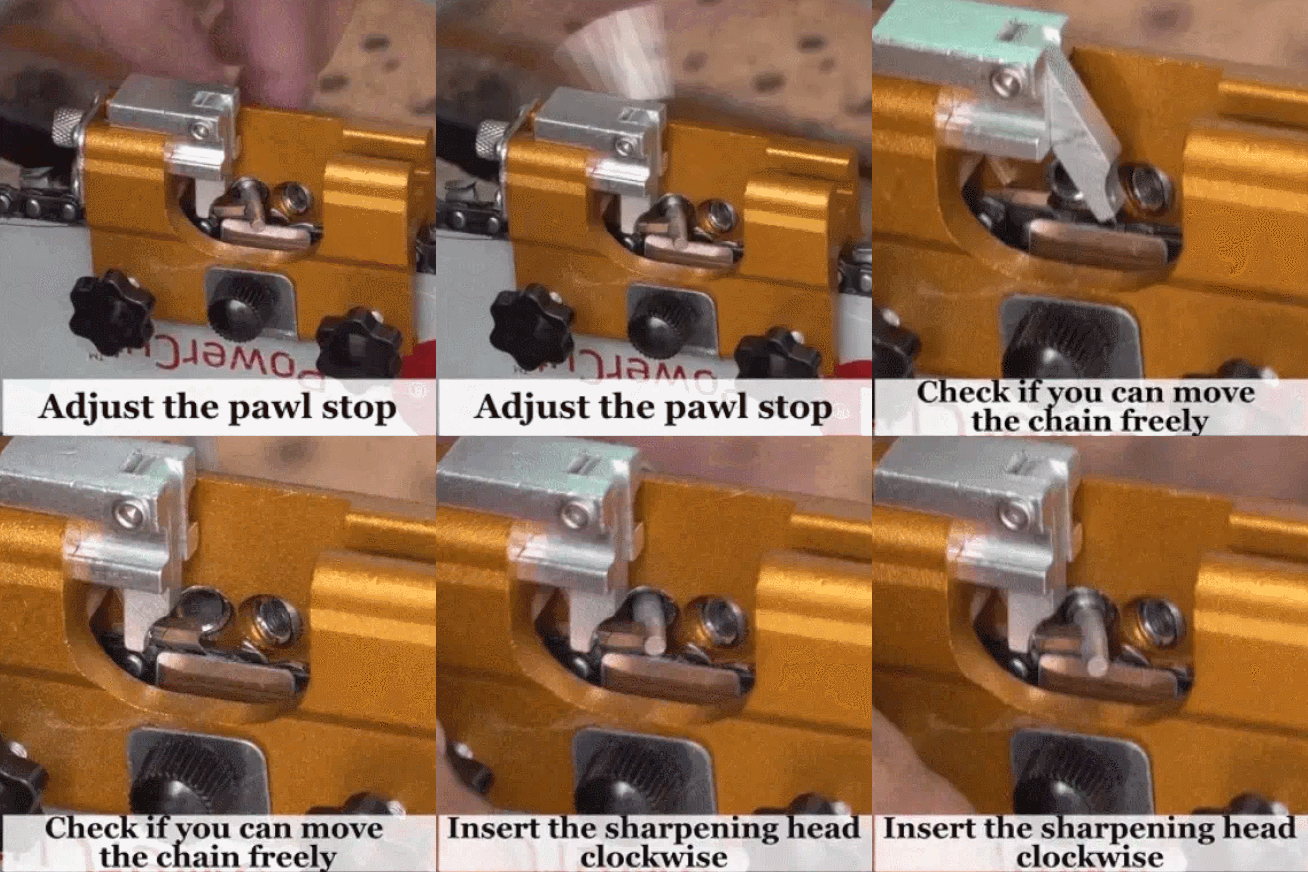
Instead of aggressively grinding away metal by eye, this fixture helps you approach each cutter with more control.
♻️ Give Old Chains Another Chance
If you use a chainsaw regularly, there’s a good chance you already have a few dull chains sitting in a toolbox, garage, truck, or workshop.
But a dull chain and a worn-out chain are not always the same thing.
If the cutters still have usable material and the chain is otherwise serviceable, proper sharpening may restore much of its cutting function.
That means this sharpener isn’t just a maintenance tool.
It can help you recover value from chains you might otherwise stop using.
Before buying another replacement, sharpen the chain you already own.
.png?w=1254&h=1254)
🎯 Adjustable Angle — Because Every Chain Shouldn’t Be Sharpened by Guesswork
Different chains may specify different sharpening angles.
That’s why the built-in adjustable angle system matters.
Set the sharpener according to the recommended angle for your specific chain, then use the fixture to maintain a more repeatable sharpening position as you work from cutter to cutter.
It’s there to make it less dependent on guesswork.
25° — More Durable Edge
A lower filing angle can provide a more conservative, durable cutting edge. It is used on certain chains and may be better suited to demanding cutting conditions where edge strength matters more than aggressive cutting speed.
30° — Balanced Everyday Cutting
30° is one of the most common sharpening angles for general-purpose chains. It offers a practical balance between cutting speed, smooth operation, and edge durability, making it suitable for everyday firewood, yard work, and general cross-cutting.
35° — More Aggressive Cutting
A larger filing angle creates a more aggressive cutter geometry. Certain chains use 35°, and this type of setup may favor faster cutting in softer woods such as pine, fir, spruce, and cedar.
Specialized Angles
Some professional or specialty chains may use other sharpening angles. For example, ripping chains used for cutting along the wood grain can use much lower angles than standard cross-cutting chains.
Important: Always follow the sharpening angle recommended by your chainsaw chain manufacturer. Wood hardness and cutting conditions may influence sharpening preferences, but the chain manufacturer’s specification should always come first.
.png?w=1254&h=1254)
⚡ Power Drill or Hand Crank
Choose the sharpening method that fits the job.
Power Drill Drive
Connect a compatible drill for faster rotary sharpening — ideal for workshop maintenance or when you have several chains to refresh.
Hand Crank Drive
Use the included crank when working outdoors, away from power, or when you prefer slower manual control.
No bulky bench grinder is required.
The fixture mounts directly to the chainsaw guide bar, making it practical for garage, farm, property, firewood, and field use.
.png?w=1254&h=1254)
🛠 CNC-Machined Aluminum Construction
The sharpener features a CNC-machined anodized aluminum alloy body with metal adjustment hardware.
The rigid structure helps create a stable sharpening platform, while machined components and knurled adjustment knobs make positioning easier and more secure.
The compact design is small enough to keep in a toolbox or equipment bag while still providing the controlled guidance that freehand sharpening often lacks.
.png?w=1254&h=1254)
Product Specifications
Product: Adjustable Angle Chainsaw Chain Sharpener
Material: CNC Anodized Aluminum Alloy + Metal Hardware
Width: 10 cm / 3.94 in
Height: 4.9 cm / 1.93 in
Grinding Head Diameter: 0.48 cm / 0.19 in
Grinding Head Length: 5.8 cm / 2.28 in
Drive Options: Hand Crank / Compatible Power Drill
Angle: Adjustable
Application: Chainsaw Chain Sharpening & Maintenance
.png?w=1254&h=1254)
-2.jpg?w=1500&h=1500)
📦 Package Includes
- 1 × Adjustable Chainsaw Chain Sharpener
- 4 × Grinding Heads
- 1 × Hand Crank
- 1 × Wrench
.png?w=1222&h=508)